I. Product Overview & Positioning
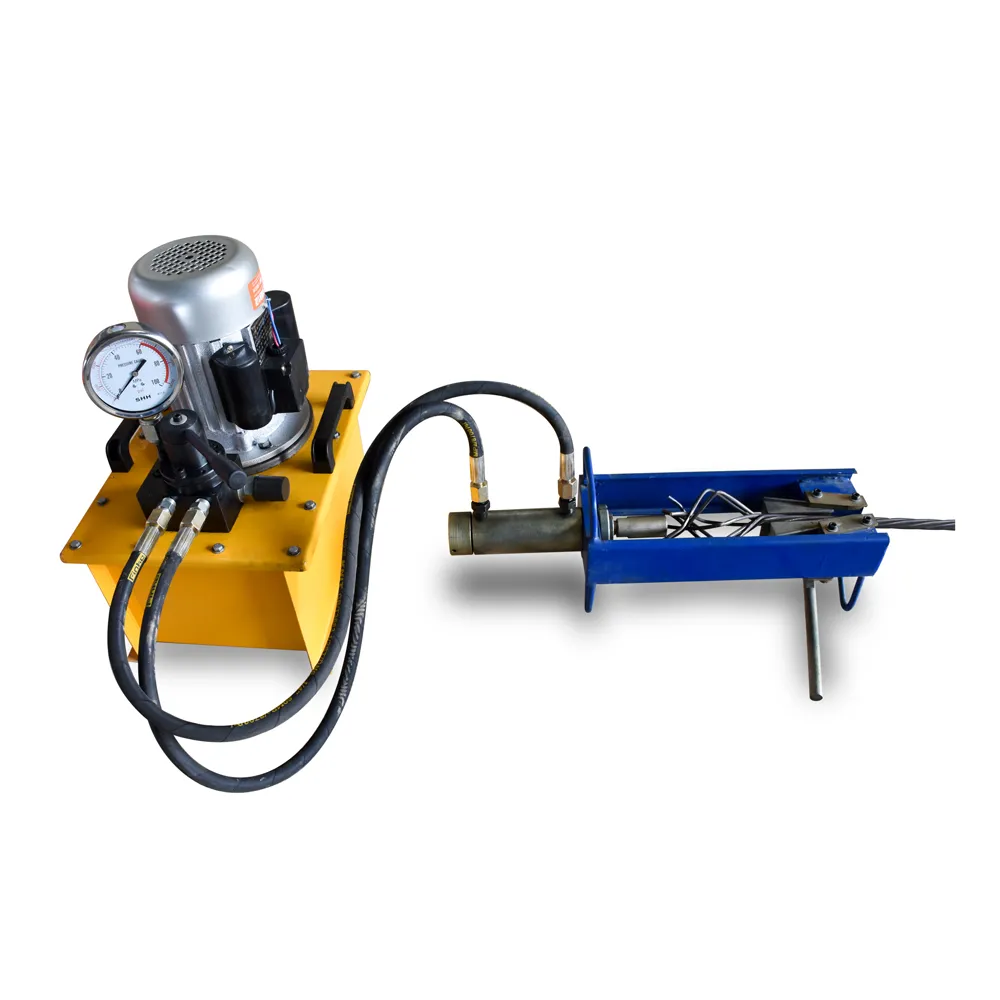
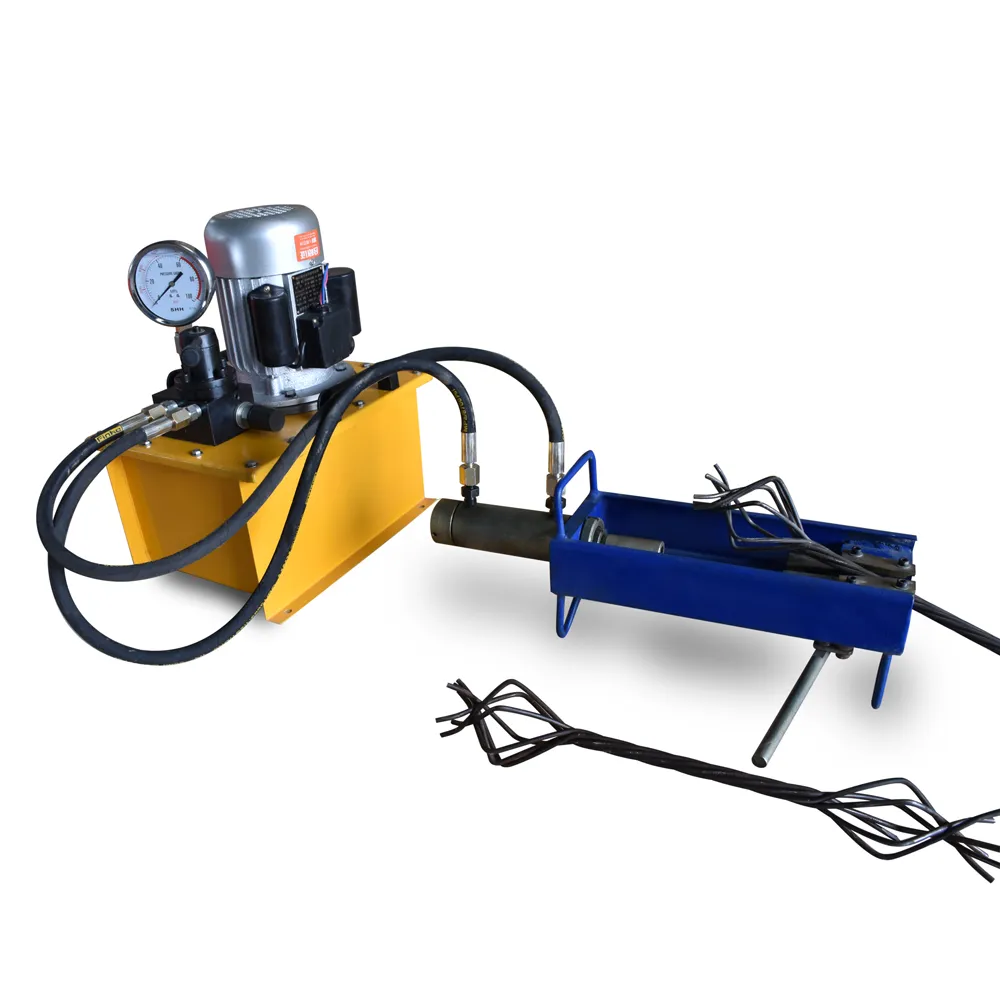
This embossing tool is professional on-site processing equipment made specifically for forming P-type prestressed fixed anchors. Its core working function is to spread and press the scattered steel wires at the tail of steel strands into a uniform flower-shaped flared structure. After concrete pouring and curing, this special flared strand end can form a solid mechanical occlusion connection with concrete. The equipment is mainly used for fixed-end forming construction of unbonded prestressing systems, which is a very common concealed anchoring process in domestic prestressed projects.
II. Main Structural Composition & On-Site Functions
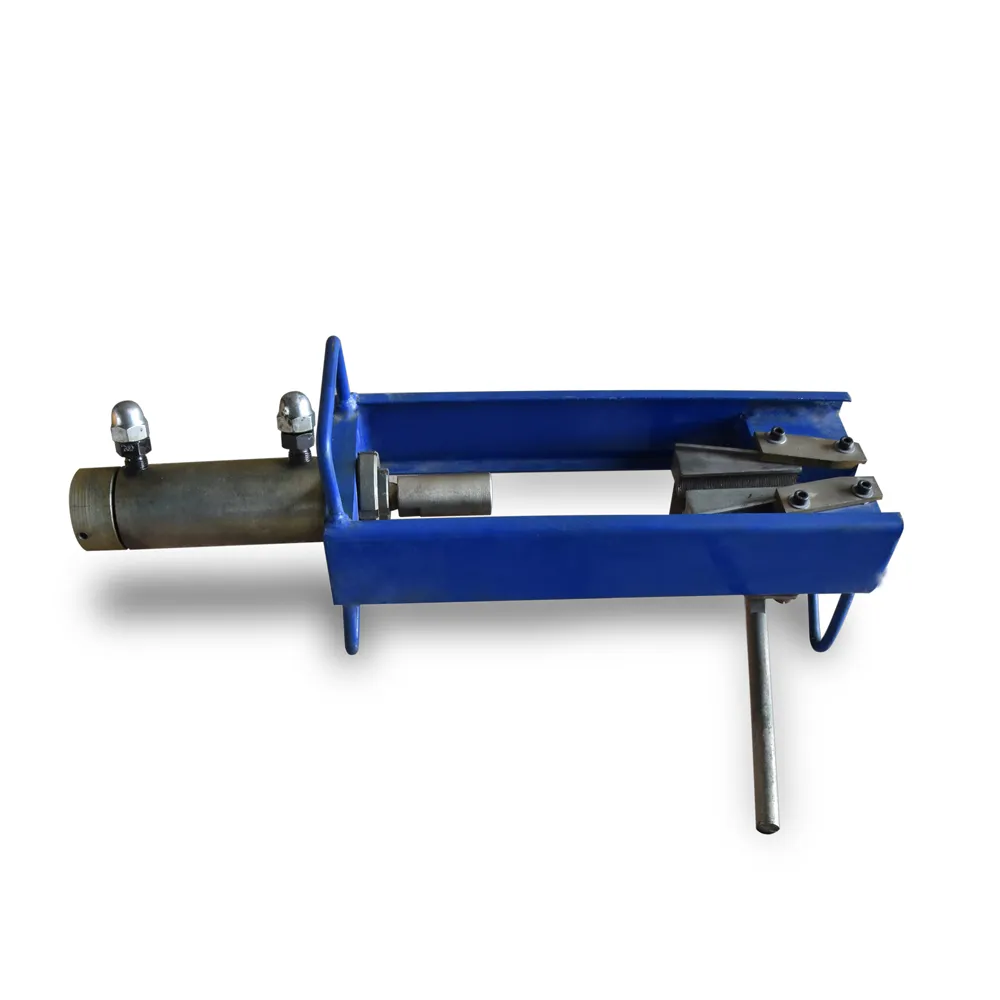
Left Hydraulic Cylinder Assembly
Matched with an external prestressing hydraulic pump, this cylinder provides stable horizontal thrust required for strand embossing and flaring molding. All embossing forming work relies on its hydraulic power to complete the whole compression process.
Blue Integral Reaction Frame
The blue outer frame serves as the main stress-bearing reaction structure during operation. It can completely offset the reaction force generated in the embossing process. The overall structural rigidity is high, and it is not easy to deform after long-term repeated compression, ensuring consistent molding accuracy every time.
Right Segmented Forming Mold
The opening and closing clamp mold on the right side is the core molding component. After the steel strand is inserted in place, the hydraulic cylinder pushes the internal mandrel to evenly flare the strand steel wires outward, so as to press out the standard flower-shaped fixed end appearance required by construction specifications.
Side Control Lever
The operating lever reserved on the side is used to control the opening and closing of the forming mold. Workers can quickly open the mold for strand feeding and close the mold for positioning, which greatly facilitates repeated feeding and discharging during batch processing.
III. Core Working Principle & Product Advantages
Mechanical Occlusion Anchoring Principle
During construction, hydraulic thrust pushes the mandrel to radially spread the seven steel wires of the strand end into a splayed flower shape. After being buried in concrete, the flared strand end can form a reliable mechanical interlock with the surrounding concrete structure. Different from conventional anchoring methods, this P-type fixed end does not need additional wedges or clamping accessories. It completely relies on structural occlusion to realize fixed-end anchoring, and has become the mainstream construction method for unbonded prestressed fixed ends.
Excellent On-Site Construction Performance
The whole equipment is compact in structure and light in weight, easy to carry and move. Workers can carry out strand embossing processing directly near beam ends and slab reinforcement areas on site without fixed operation stations, realizing flexible mobile construction. Supported by stable hydraulic pump pressure, each strand is stressed evenly during molding. The flaring angle is consistent and uniform, effectively avoiding defective problems such as inconsistent wire opening or local steel wire breakage caused by uneven force.
With the help of the side quick-opening lever, mold opening, feeding and closing positioning can be done in one step. The single-strand molding cycle is short, which can fully meet the batch strand processing demands of large-area slab prestressing construction. The equipment has strong versatility, compatible with two common specifications of 12.7mm and 15.2mm prestressed steel strands on the market. On-site replacement of molds can quickly adapt to different strand processing requirements.
Process & Economic Advantages
The P-type flower-shaped fixed end formed by embossing is completely buried inside the concrete without any protruding anchoring parts. It saves end space, and is very suitable for concealed anchoring construction of floor slabs, box girders and other components with limited end space. Compared with the traditional sleeve swaging fixed end process, this embossing method does not need to configure additional swaging sleeves, directly reducing the procurement and use of on-site auxiliary materials, with better economic benefits.
IV. On-Site Operation Notes
Before formal embossing processing, workers need to straighten the reserved strand ends first, and thoroughly clean surface rust, oil stains and sundries to ensure clean and flat strand ends.
Strictly control the hydraulic pressure value during operation. Excessive pressure will cause brittle cracking of steel wires, while insufficient pressure will lead to incomplete flaring of the flower end, failing to meet the design anchoring force requirements.
After the embossing molding is completed, inspect the flared steel wires one by one to check for cracks, breakage and other defects. Only after passing the inspection can the strands be buried in concrete for subsequent construction.
V. Main Application Scenarios
This embossing tool is widely used in the fixed-end processing of unbonded prestressed strands for basement floor slabs. It is also commonly adopted for embedded fixed-end molding of hollow slabs and small box girder prestressed tendons in bridge projects. In addition, it is the preferred processing equipment for concealed prestressed anchoring ends in large stadiums, underground garages and other large-scale building structures.