Post-tension jack construction
In the construction of continuous bridge beams and large-span frame structures, prestressing and tensioning is a critical process directly impacting structural safety. Whether dealing with pre-tensioning in a precast yard or post-tensioning for cast-in-place work on bridge piers, the output accuracy and stability of the prestressing jack are key focal points for on-site quality inspection. Drawing on practical engineering experience, this article discusses the logic behind jack selection for different working conditions and the coordination required with hydraulic pump stations.
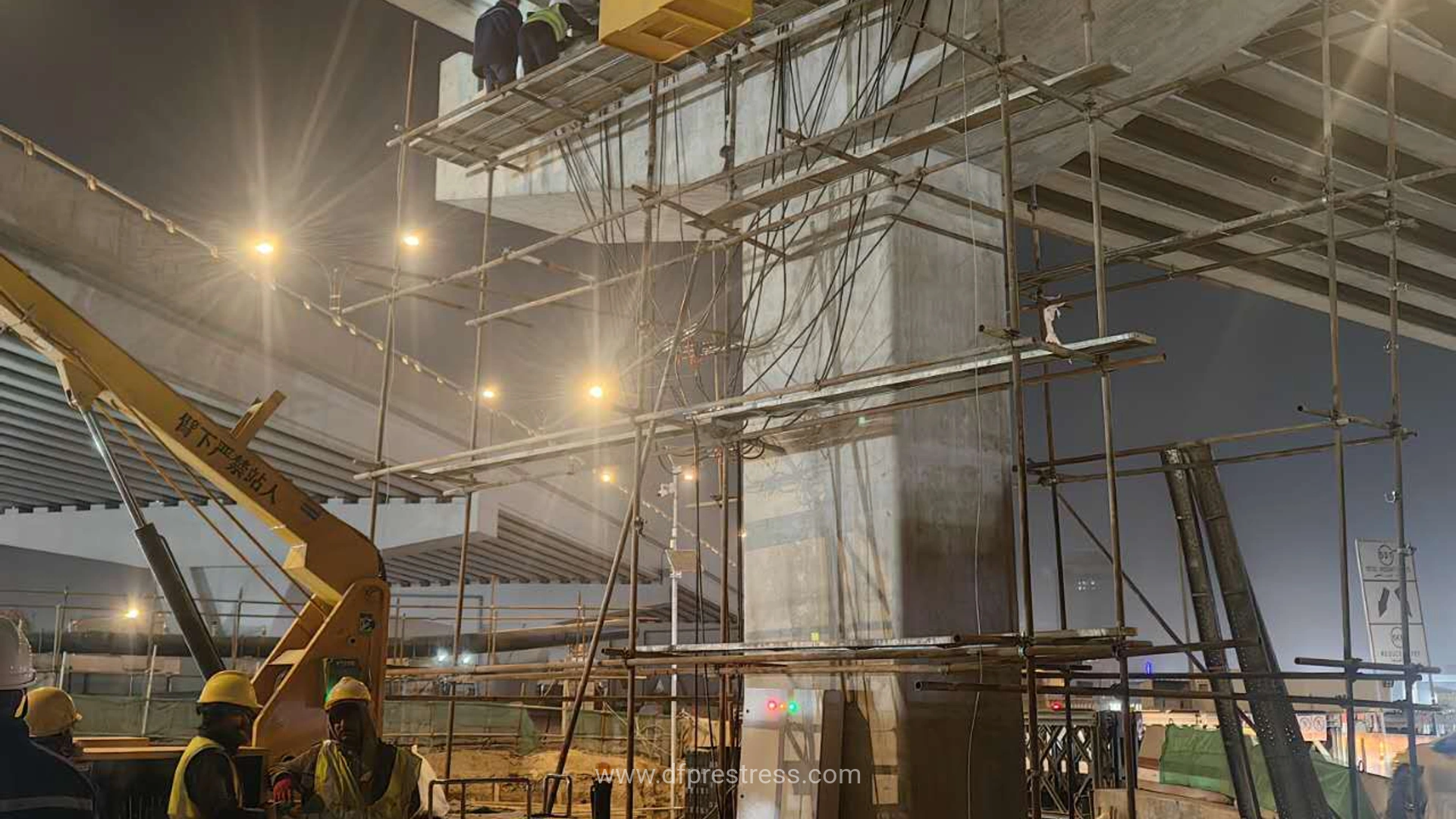
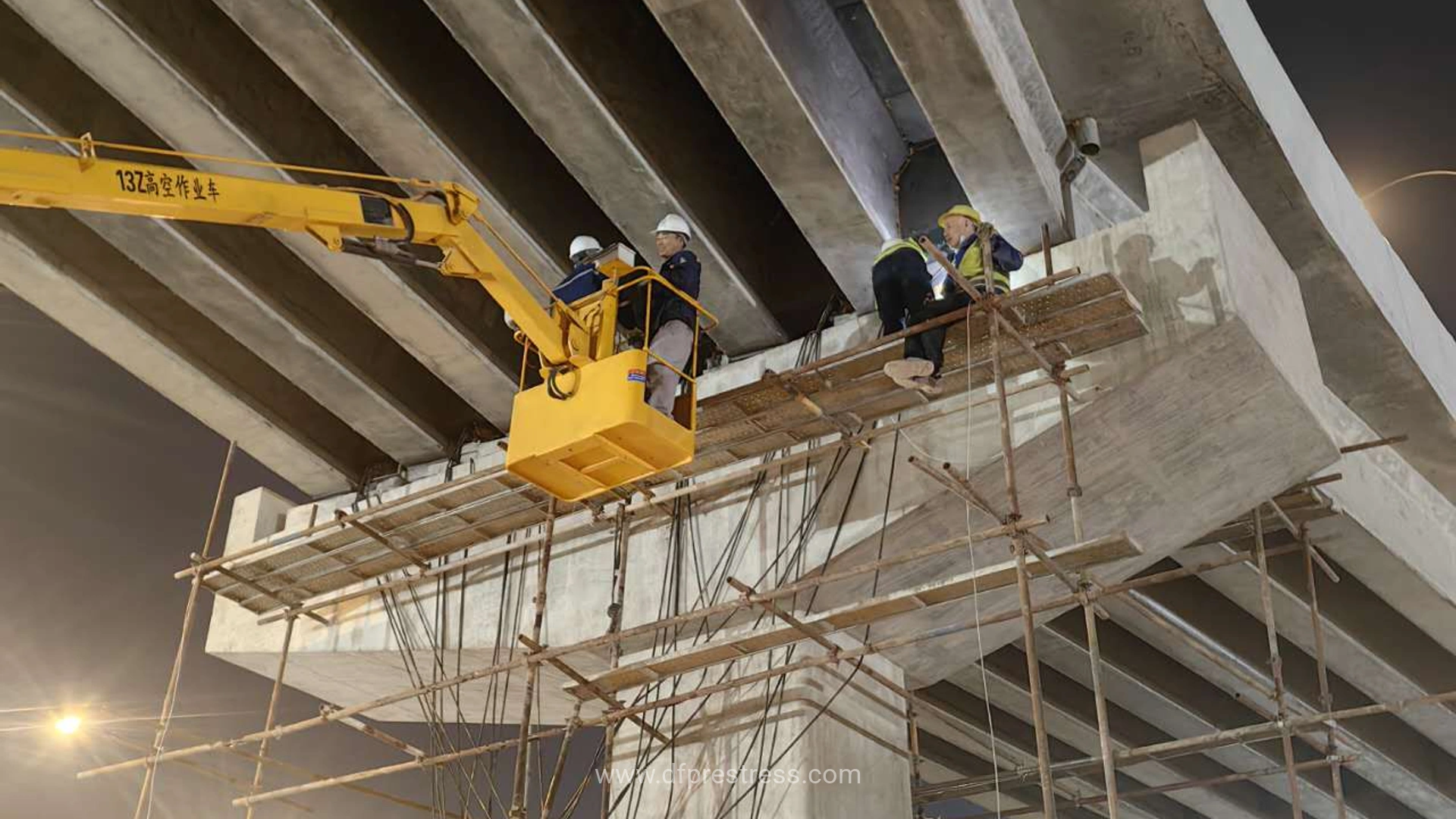
I. Pre-tensioning vs. Post-tensioning: Distinctly Different Tensioning Scenarios. In practice, the equipment requirements for pre-tensioning and post-tensioning differ fundamentally: Pre-tensioning (Precast Yard): This typically involves shift-based production on fixed casting beds. Before concrete is poured, steel strands must be tensioned to the design stress level using a pre-tensioning jack. As this is an assembly-line operation, the jack requires rapid return capabilities and high repeatability. Post-tensioning (Construction Site): Tensioning occurs only after the concrete has cured to approximately 90% of its design strength, utilizing pre-formed corrugated ducts. Standard post-tensioning jacks are used here. The site environment is complex—often requiring the erection of tensioning platforms—placing higher demands on equipment dust resistance and portability.
II. From Single-Strand to Multi-Strand: Selecting Jacks Based on the Anchorage System. The strand threading method and the number of holes in the anchorage assembly directly determine which tools are brought onto the working platform.
- Floor Slabs and Local Reinforcement: Single-Strand Tensioning (Monostrand). For building floor slabs or lightweight bridge decks, heavy-duty multi-strand anchorage equipment is usually unnecessary. Operational Essentials: Workers can carry the monostrand jack directly to the work area. Advantages: These monostrand jacks are compact and lightweight. When performing monostrand stressing operations, a single operator can easily position the jack and set the wedges; the process is highly efficient and well-suited for work in confined spaces or hard-to-reach areas.
- Box Girders and Long-Span Main Reinforcement: Multi-strand group-anchor stressing. When constructing the main reinforcement for long-span prestressed continuous box girders, single-strand stressing often fails to meet structural load requirements, necessitating the use of multi-strand group-anchor systems. Equipment Requirements: High-tonnage multi-strand stressing jacks are essential. Technical Key: As a standard bridge post-tensioning jack, the equipment must be capable of simultaneously tensioning multiple—or even dozens of—steel strands. Uneven tensioning across strands can easily lead to accidents such as strand slippage or the snapping of individual wires.
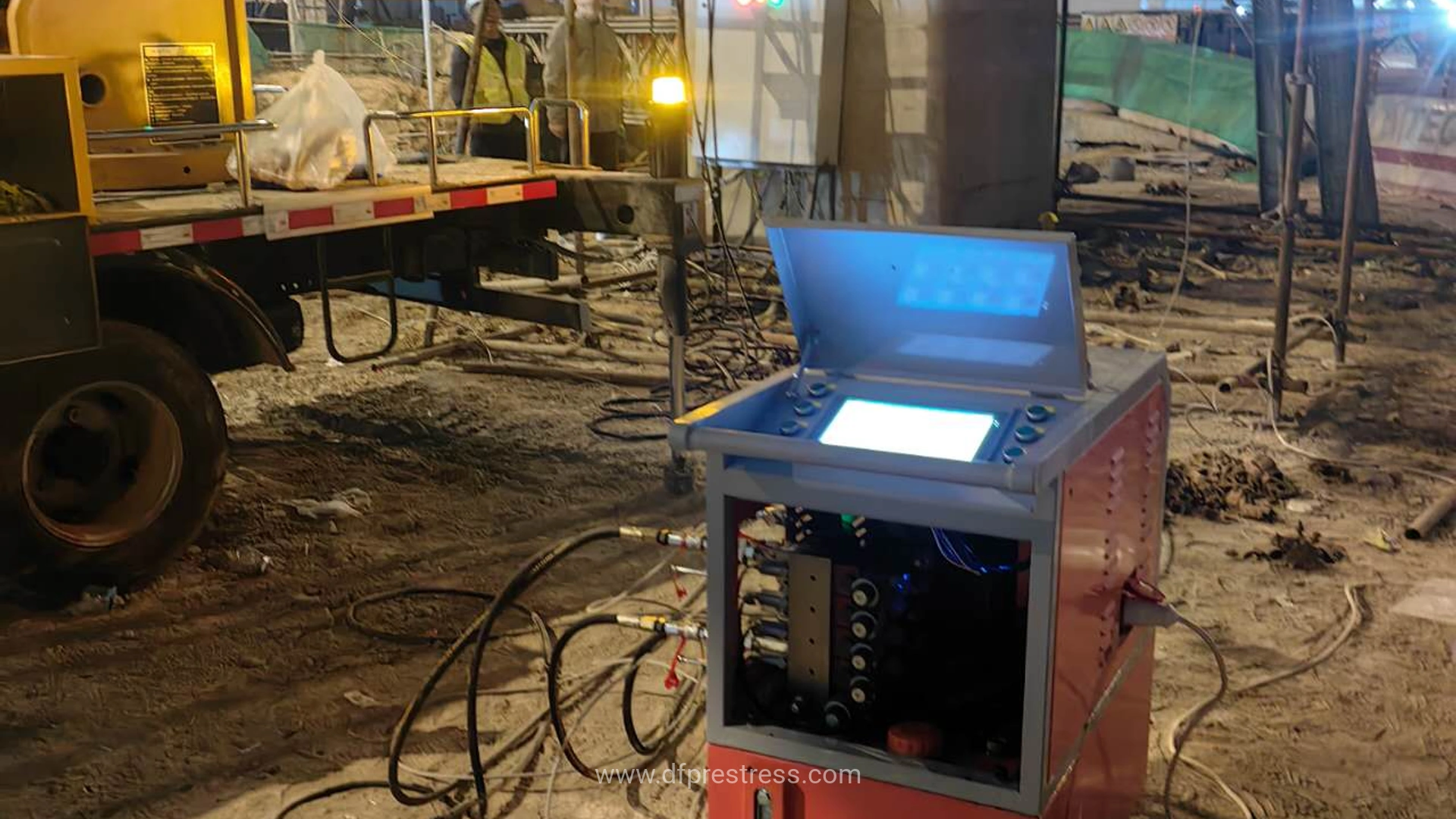
III. Hydraulic Pump Station: The “Heart” of the Stressing System. While the jack performs the actual work at the front, the entire operation is futile if the rear oil pump fails to provide a stable oil supply. Field Experience: Prestressed stressing requires a “slow and steady” approach; the rate of pressure increase must remain within design specifications. Consequently, the accompanying hydraulic pump must feature a fine-adjustment valve to ensure consistent oil pressure output without fluctuations. Modern, high-standard construction sites are increasingly adopting intelligent synchronous stressing systems, utilizing high-precision electric pump stations to power the hydraulic jacks. These systems use sensors to automatically calculate elongation and tensioning force, stopping and maintaining pressure once the target stress/anchorage point is reached—a method far more accurate than the traditional practice of workers manually monitoring pressure gauges and counting scale markings.
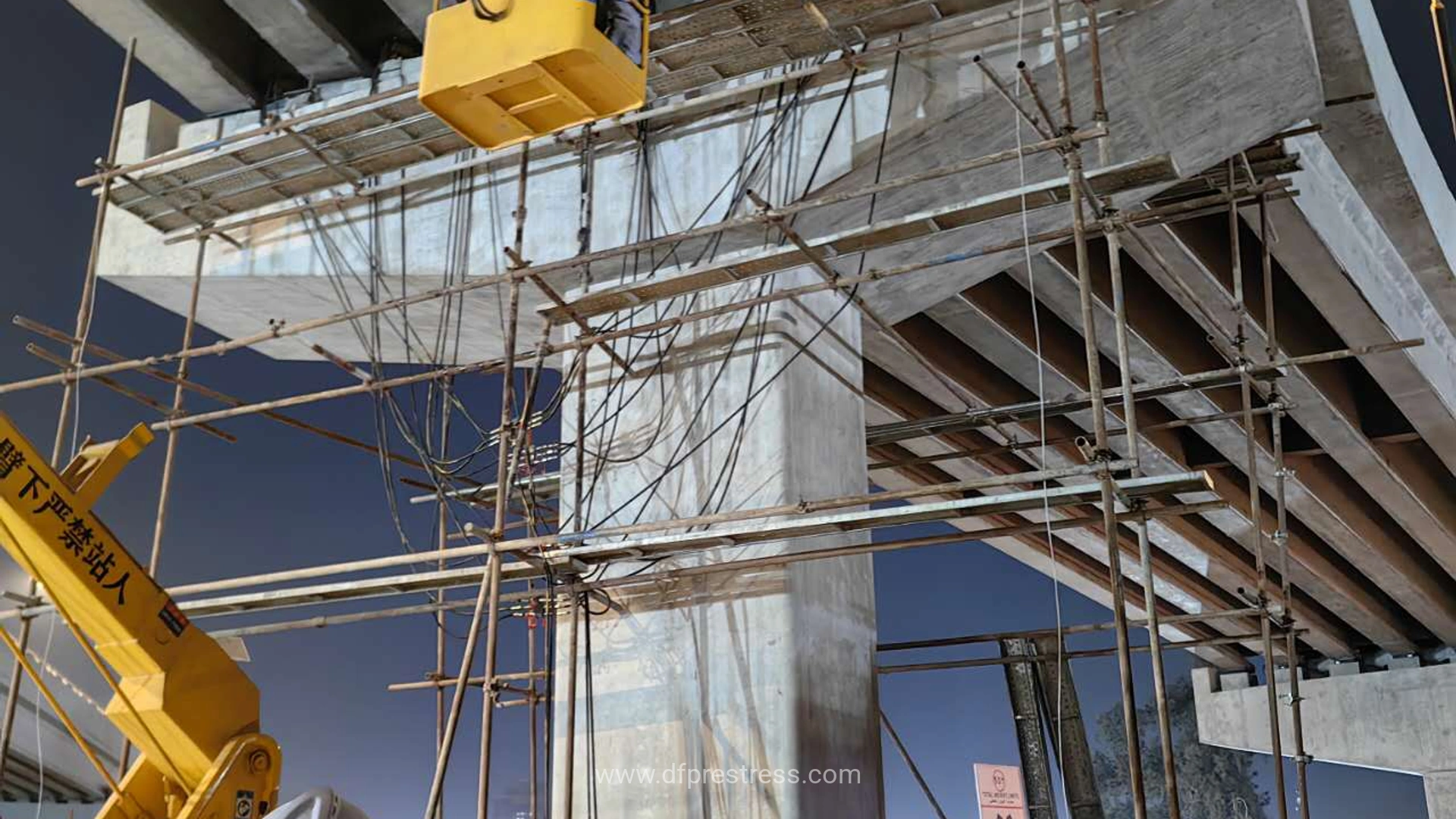
IV. Quality Inspection and Site Management Recommendations: To ensure smooth operations and prevent accidents when using post-tensioning jacks, strict adherence to the following site protocols is mandatory:
Periodic Calibration: Jacks and their associated pressure gauges must undergo scheduled verification. Typically, recalibration at a laboratory—including the generation of a new P-Y curve—is required every six months or after 200 stressing operations.
Safety Protection: Standing directly behind the jack during the stressing process is strictly prohibited. Whether performing single-strand or multi-strand tensioning, the ferrules at both ends of the high-pressure oil hoses must be securely locked to prevent the hoses from bursting and causing injury.