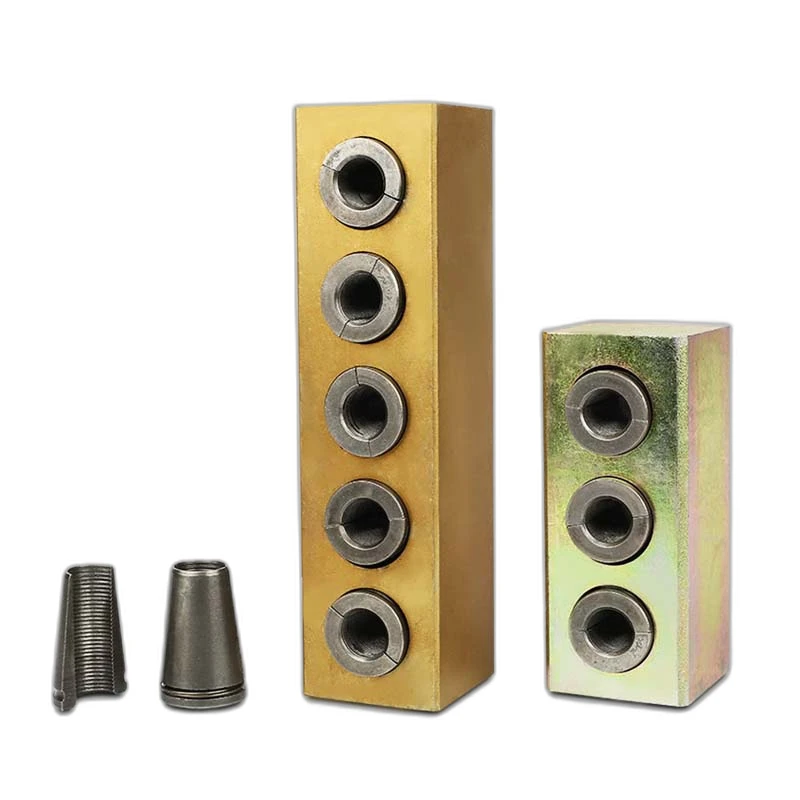
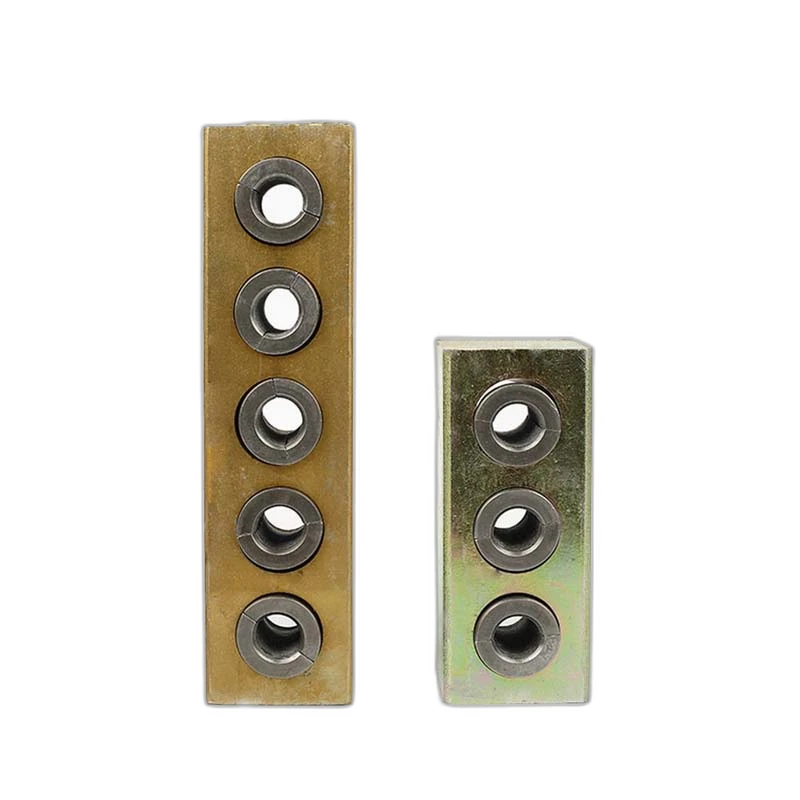
The tendon ducts are arranged in a single vertical row, resulting in a narrow, elongated cross-section. This design is ideal for locations with limited width but ample vertical space; compared to standard flat anchors, it allows for a higher number of steel strands within a smaller lateral footprint, overcoming the challenge of accommodating multiple strands in narrow structural members.
Primarily used for precast hollow-core slab girders, short-span narrow box girders, slender prestressed building beams, and narrow prestressed components in subway construction. It is designed for structural areas with small transverse dimensions where circular multi-hole anchors cannot be used and where arranging horizontal flat anchors is difficult.
Tell us what you need. Available model and stroke combinations will be confirmed in the quotation.
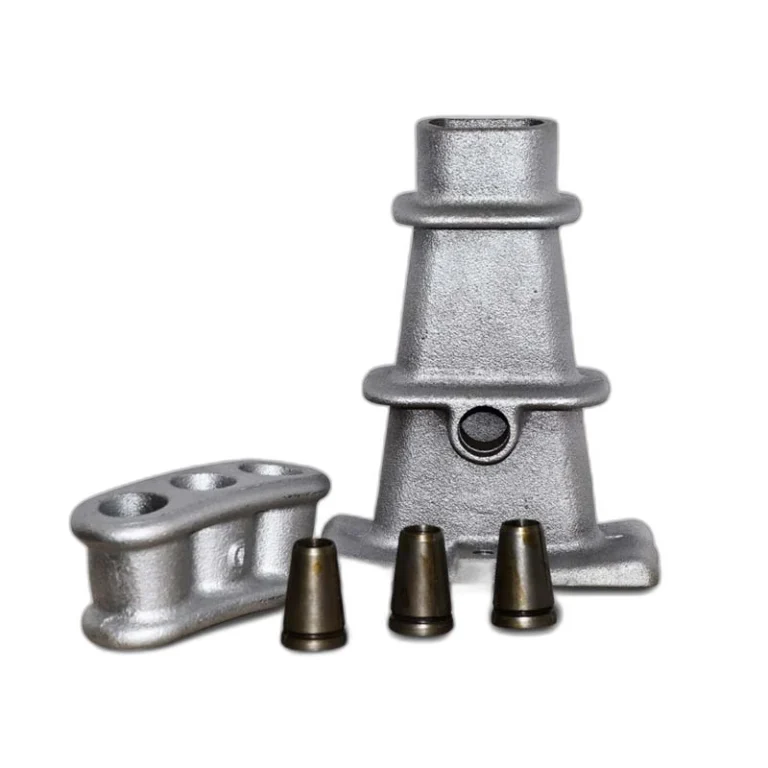
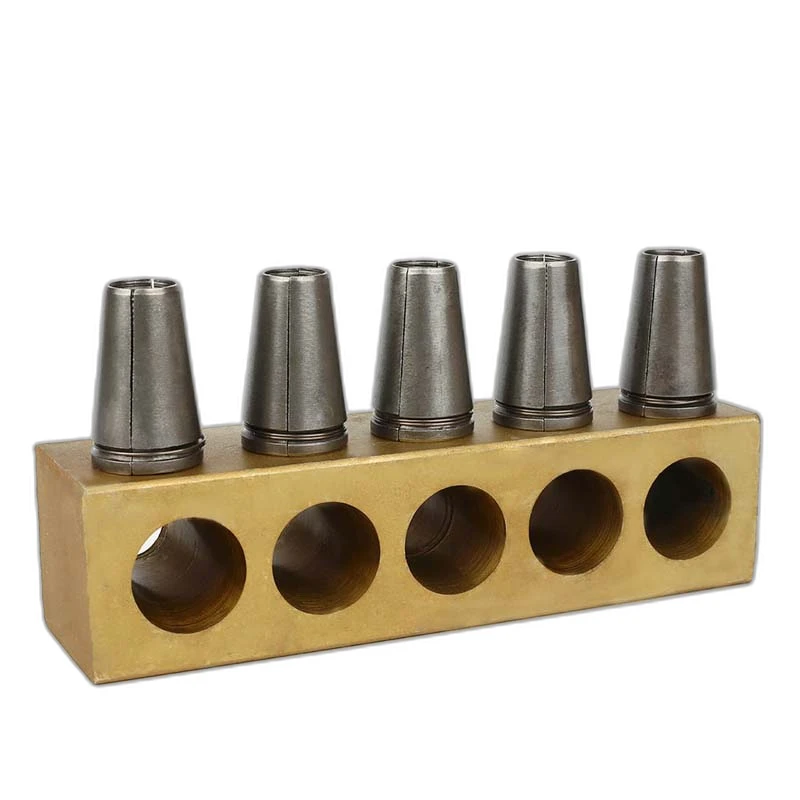
Rectangular anchor plate body: Available in two vertical-array specifications (3-hole and 5-hole); holes are arranged in a single vertical line; the surface is galvanized for rust prevention, and each hole is machined with a conical anchorage seat.
Two-piece wedge grips: Conical grips designed for the assembly; one set of grips corresponds to a single steel strand, securing the strand via wedging force during tensioning and retraction.
Holes are arranged in a single vertical column, resulting in a narrow, elongated cross-section; this suits locations with limited width but ample vertical space, such as narrow hollow-core slabs, webs of small precast box girders, and narrow, elongated prestressed secondary beams.
Compared to horizontal flat anchors, it allows for a higher density of steel strands within a smaller lateral width, solving the problem of accommodating multiple strands in narrow structural members.
Forged as a single, integral unit, the anchor plate offers high overall rigidity; loads are distributed evenly across the anchorage holes, minimizing the risk of localized deformation during tensioning.
Each conical hole operates independently; anchorage slip in one strand does not affect the others, providing greater safety redundancy.
Available in a complete range of modular specifications (ready-made 3-hole or 5-hole units), eliminating the need for on-site assembly and simplifying positioning during the rebar tying stage.
Compatible with flat anchor bearing plates and flat corrugated ducts; the complete prestressing duct system is flat, making it ideal for thin or narrow concrete members.
The galvanized surface offers strong resistance to moisture and rust, making it suitable for both batch production in precast yards and open-air on-site construction.
Primarily used for precast hollow-core slab girders, short-span narrow box girders, narrow/elongated prestressed building beams, and narrow prestressed components in subway construction.
| Parameter | Value | |
|---|---|---|
| Applied Strand Size | φ12.7mm / φ15.2mm | |
| Flat Duct Inside Dimension | 50x19mm to 90x19mm | |
| Ultimate Tensile Force per Strand | 368-1300KN | |
| Hardness | Wedge 78-85HRA | |
| Anchor Head | 25-36HRC | |
| Diameter | 12.7mm / 15.2mm / 15.7mm | |
| Material | 40Cr | |
| Wedge | 2/3 Sections | |
| Matched Jack | QYC270 |